Tesamorelin vs Sermorelin: what each one does and what studies found
Both ask your body to raise its own growth hormone. They differ in size, how long they last, and how much human proof they have.
What sets tesamorelin and sermorelin apart
Tesamorelin vs sermorelin starts with the size of the brain's message, and that full message has 44 parts made from small protein pieces that act as one note. Tesamorelin uses the whole message. Sermorelin uses a shorter part of it.
Both medicines act at the growth gland near the brain's base. Your own growth hormone then moves into the blood. Tesamorelin has an added piece that slows breakdown. It also has two large human studies behind its approved use.
This comparison can't tell you which medicine fits your health. I'd ask what approved use the clinic is treating. Ask what visits will cost and what blood work is planned. Research material isn't for you to inject.
How the two medicines differ in size and staying power
The brain's full growth message is made from small protein parts. Tesamorelin copies the whole message and adds a fatty piece at the end [1]. Sermorelin uses a shorter part. Its first 29 parts carry the main message.
The medicines act on the same growth gland. In response, your own growth hormone enters the blood [2]. Tesamorelin's full size and added part help it last longer. Your body doesn't break it down as fast.
Size isn't the whole choice for you. Ask which drug has been studied for your exact problem. Ask whether that use is approved. Ask how the clinic will check your blood work too.
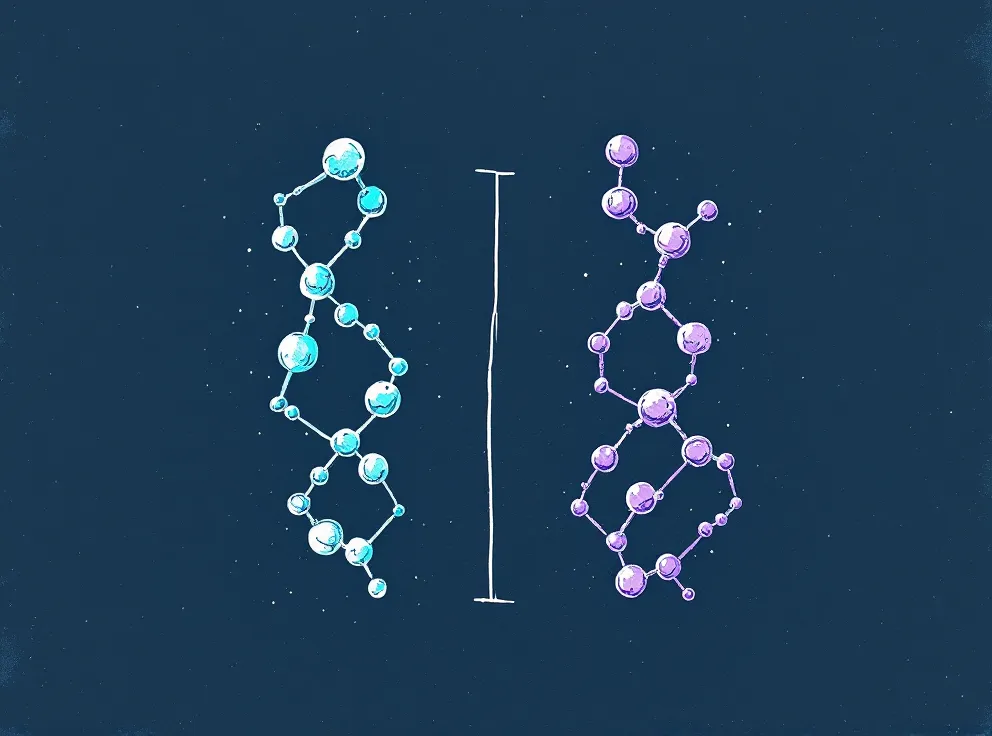
Why tesamorelin resists quick breakdown
Your body breaks down its own growth message within minutes. An added piece slows tesamorelin's breakdown [1]. That extra time is the main design difference. It doesn't make the drug fit every goal you may hear about.
A review says tesamorelin was made to raise your body's own growth hormone. The hope was fewer problems than giving growth hormone itself. The last of 3 main testing steps before approval showed a drop in deep-belly scans for people taking HIV medicines [9]. Ask about swelling, joint pain, and sore skin rather than trusting a broad safety claim.
Tesamorelin's added piece isn't part of sermorelin. Both still prompt your own growth gland. Neither turns research powder into a safe home trial for you. That warning applies even if a powder looks sealed.
If a clinic compares them, ask for proof tied to your concern. You can also ask how long treatment and follow-up may take. A longer-lasting drug won't always be the right choice. The approved use still matters most.
What tesamorelin has proved that sermorelin hasn't
FDA approved tesamorelin for one use in 2010. It covers extra belly fat in people who take HIV drugs. Two studies from the last of 3 main testing steps support that use [3][4]. A liver-fat study [5] and a 2026 review of five studies [13] add more detail.
Both medicines prompt the growth gland to release hormone [2][9]. Tesamorelin differs because its added piece slows breakdown. It also has the deeper human record for this belly-fat use. That record doesn't prove wider uses.
Both drugs are barred in organized sport. Uses outside an approval need a frank talk about gaps in proof. Ask what the clinic will measure. Also ask what happens if the result doesn't change.
The source list lets you check the tesamorelin papers yourself. It won't choose a treatment for you. That choice belongs with a doctor who already knows your health history. Ask what the visits and blood tests may cost.