Tesamorelin research starts with what changed for people.
First come the scan and blood-test findings. Then comes how the medicine works and why one memory study can't settle the question.
What the studies found in people
For people treated for HIV, the scan showed a drop behind the stomach while IGF-1, a liver-made growth protein, rose 81% in the blood at the same time. The IGF-1 rise showed the medicine had caused the expected response. The study didn't set a safe target for your blood test.
Older adults also took part in one memory and planning study. Tesamorelin prompts the growth gland near the base of your brain. Your own hormone then rises. I'd read each result as an answer for those people, not your personal outlook.
How tesamorelin raises growth hormone and the test called IGF-1
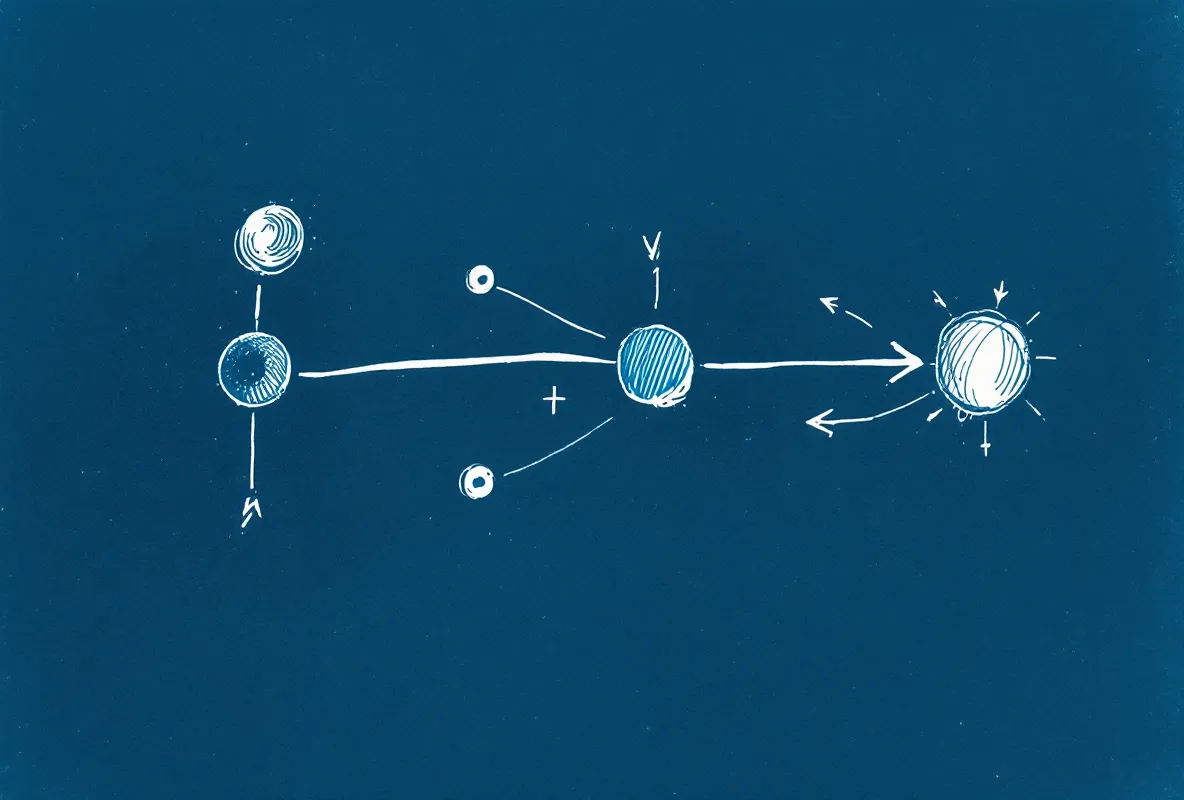
Tesamorelin arrives at the growth gland near the base of your brain. That contact releases your growth hormone into the bloodstream [2]. The hormone arrives in bursts, much as it normally does. The drug doesn't replace that hormone from outside.
In reply, the liver produces IGF-1, a growth protein measured in blood [2]. IGF-1 and growth hormone help turn some stored fat into fuel [2]. The scan changed most behind the stomach. A doctor can follow this response with a blood test.
Work with liver cells in a dish found less of a swelling-related body chemical called IL-6 [2]. That finding may help explain why liver fat fell. It wasn't a test in people. A dish study can't prove a wider benefit for you.
The added part delays tesamorelin's breakdown [1]. The extra time helps the message reach the gland. Your doctor won't need a special test for that added part. Useful checks may include blood sugar, other blood work, and scans.
What response tesamorelin asks of the growth gland
At the growth gland, tesamorelin prompts your own hormone to rise [2]. A study of 13 healthy men found a higher nightly average after two weeks [7]. The researchers were confident that the change wasn't random. Still, such a small study can't tell you how every person will respond.
What tesamorelin changes on the blood test called IGF-1
Tesamorelin raised a liver-made growth protein called IGF-1 in each study. The large HIV study found a rise [3]. In healthy men, it rose by 181 micrograms per liter, a lab measure [7]. The older-adult result rose 117% [8], so doctors may watch IGF-1 during care.
What the large belly-fat studies found
A 26-week study followed 412 adults with HIV and extra belly fat. It was the last of 3 main testing steps before approval. People given tesamorelin 2 mg/day had a drop on the deep-fat scan. Blood fat fell by 50 mg/dL rather than rising by 9 mg/dL, and the IGF-1 liver test rose [3].
The next study lasted a year at 2 mg/day. It followed 273 people on tesamorelin, while 137 got placebo, a shot without tesamorelin. The deep-fat reading stayed 18% lower through 52 weeks. Blood sugar didn't show clear harm [4].
A 2026 review brought together five treatment-comparison studies. The review reported less belly and liver fat, with more tissue that wasn't fat [13]. Those averages can't tell you what your scan will show. Only a doctor can read them alongside your health.
What scans showed before and after tesamorelin
People often ask about before-and-after photos, but these studies used scans. At 26 weeks, the group's deep-fat reading had fallen [3]. At 52 weeks, that change held at 18% for those still taking tesamorelin [4]. The scans measured the group, not one person's likely result.
Once the shots ended, fat began building again within weeks [4]. That return matters when you ask how long care may last. The findings don't predict your own scan. They also don't mean the fat beneath your skin will shrink.
What tesamorelin changed in belly fat for adults with HIV
The study enrolled people on HIV care who carried extra belly fat. After 26 weeks, the deep-fat scan fell for those on tesamorelin 2 mg/day. Those given placebo, a shot with no tesamorelin, gained some fat [3]. That doesn't prove ordinary weight loss, and lab powder isn't for you to inject.
Which belly fat did tesamorelin change?
Tesamorelin helped the body use some deep belly fat as fuel. It didn't show the same change in the layer beneath your skin. A review published in 2026 reported a drop behind the stomach across five treatment-comparison studies [13]. Researchers link that change to the rise in your own growth hormone [2].
When did scans show a change from tesamorelin?
At 26 weeks, scans showed a drop in deep belly fat [3]. The change held at 18% through 52 weeks while treatment continued [4]. Within weeks after treatment stopped, the fat was building again [4]. Your timing could differ, and no study can name a date when you'd see a change.
What tesamorelin changed in liver fat
A 6-month study followed 50 adults with HIV. Tesamorelin went to 28 people, while 22 got placebo. The deep-belly-fat scan fell by 42 centimeters squared, an area measure rather than lost pounds. Liver fat also fell [5].
A 2026 review of five treatment-comparison studies reported lower liver fat too [13]. Other reviews say deep belly fat can add to liver scarring in people with HIV [11]. That may explain why less belly fat could help the liver.
Researchers think growth hormone and the liver growth protein called IGF-1 play a part. They aren't sure how much each part matters for you. Fatty liver disease alone isn't an approved use. The only approval remains the HIV-related belly-fat problem [6].
Could tesamorelin help fatty liver disease without alcohol?
A 6-month study involving adults who had HIV found a small drop in liver fat [5]. Researchers were confident that the drop wasn't random. Reviews call tesamorelin a possible choice for HIV-related fatty liver disease [11]. FDA approval doesn't cover liver fat by itself, so ask what proof fits your case [6].
How might tesamorelin affect a fatty liver?
The study found a small drop in liver fat [5]. Researchers think growth hormone and the liver growth protein called IGF-1 may help by cutting deep belly fat. Reviews say deep belly fat can add to liver scarring in people with HIV [11]. The work can't show that people without HIV would get the same result.
What liver-fat change did tesamorelin studies find?
One study involving adults who had HIV found a small drop in liver fat [5]. The drop was clear enough to trust, though it was still small. A 2026 review of five treatment-comparison studies reported a drop as well [13]. Those results don't answer every form of fatty liver disease.
What two studies found about memory and planning
A 20-week study followed 152 older adults, including 66 with mild memory trouble. Each got 1 mg/day of the study drug or placebo, and no one knew which. Planning skills improved, while spoken-word memory may have improved but wasn't clear [8]. That result may not be large enough for a person to notice.
The same study found the liver growth blood test called IGF-1 rose 117%. Older adults with and without mild memory trouble had much the same result. The finding sounds hopeful. One study still can't settle your care choice.
A linked brain-scan study also kept people and staff from knowing who got each shot. After twenty weeks at 1 mg/day, the scans found changes in brain chemicals [10]. The adults were 55-87 years old. The study couldn't say whether those changes were helpful, harmful, or just present.
A 2025 HIV study found smaller waists but no clear memory benefit [14]. The two human studies don't point the same way. If memory worries you, ask what else might cause the change. Your doctor can decide what to check first.
What did tesamorelin change in older adults' thinking?
One 20-week study followed 152 older adults, including 66 with mild memory trouble. People getting the study drug at 1 mg/day did better on planning tasks. Spoken-word memory may have improved, but the finding wasn't clear. The liver growth blood test called IGF-1 rose 117% [8].
A linked brain scan found changes in several brain chemicals [10]. Researchers couldn't tell whether those changes were good or bad. Both findings came from the same line of work. They don't prove tesamorelin will protect your memory.
What tesamorelin hasn't proved for people without HIV
The large fat studies followed people treated for HIV with HIV medicines [3][4]. Healthy men took part in a small hormone study [7]. One older-adult study looked at memory, not general weight loss [8]. No big study has proved wider fat loss, so a clinic can't know what would happen to you.